Work Won’tBreak My Soul
It’s about how to gain, maintain, and reset peak levels of energy, while working in a high performing job. And it’s written in a way that lets you apply it specifically to you, or anyone you care about.
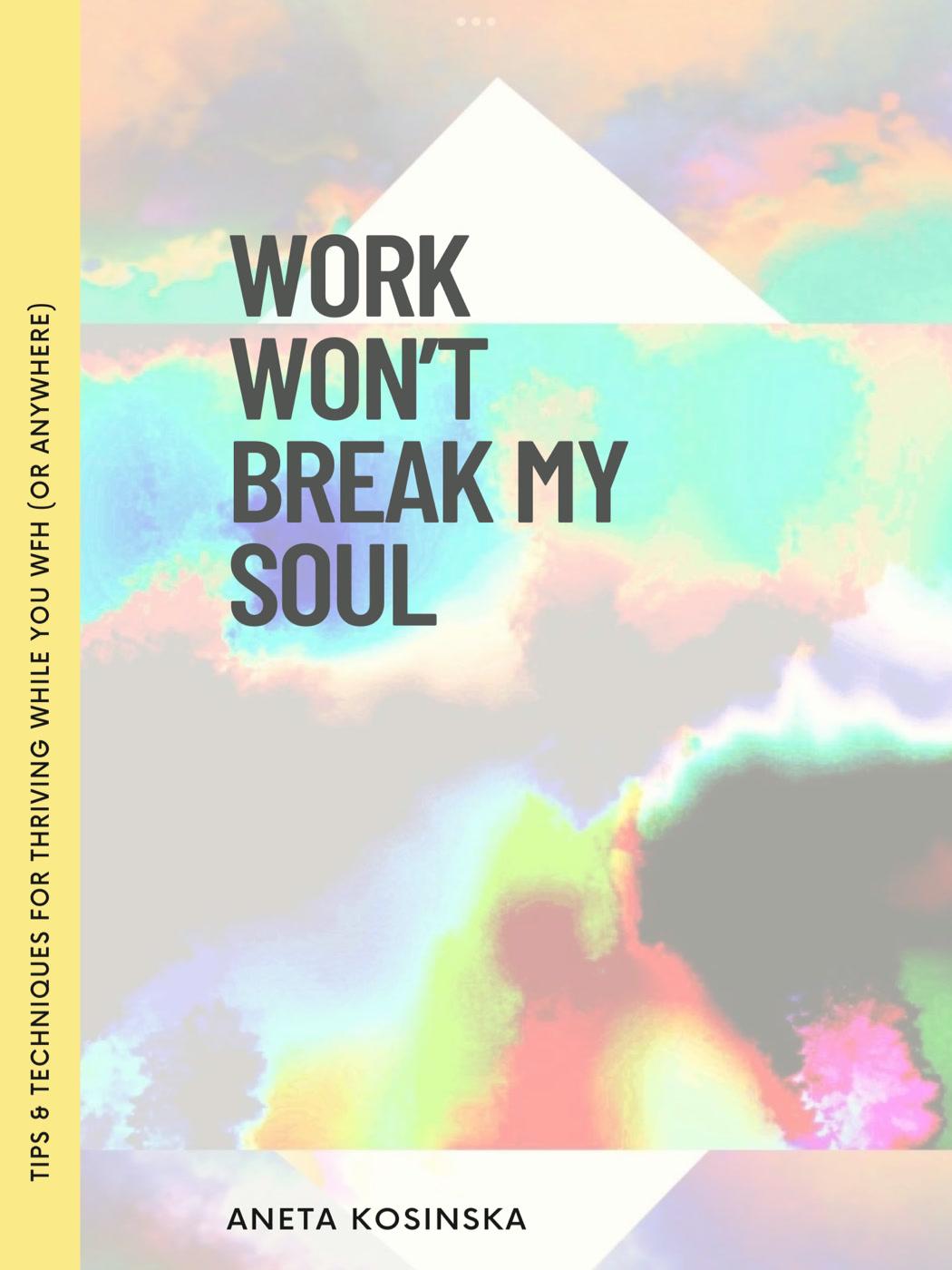
Tips and techniques for thriving while you WFH, or anywhere.
- 81 pages
- Three parts, ten named practices
- Around 45 cited studies
- 100+ vetted resources
- PDF, yours immediately
- Treating every hour as equally productive
- Pushing through fatigue to “prove” output
- Flooring it on 100mph to burnout
- Protecting recovery time like a meeting
- Matching hard tasks to your best energy hours
- Modeling sustainable pace for your team
- Don’t get AI brain fog or technology overwhelm.
- Don’t fall for hustle culture or productivity tactics.
- Not worth it.
I put this exact shift into my Working From Home E-Guide, built for leaders who need to manage and sustain their energy so they thrive while working from home, or remotely.
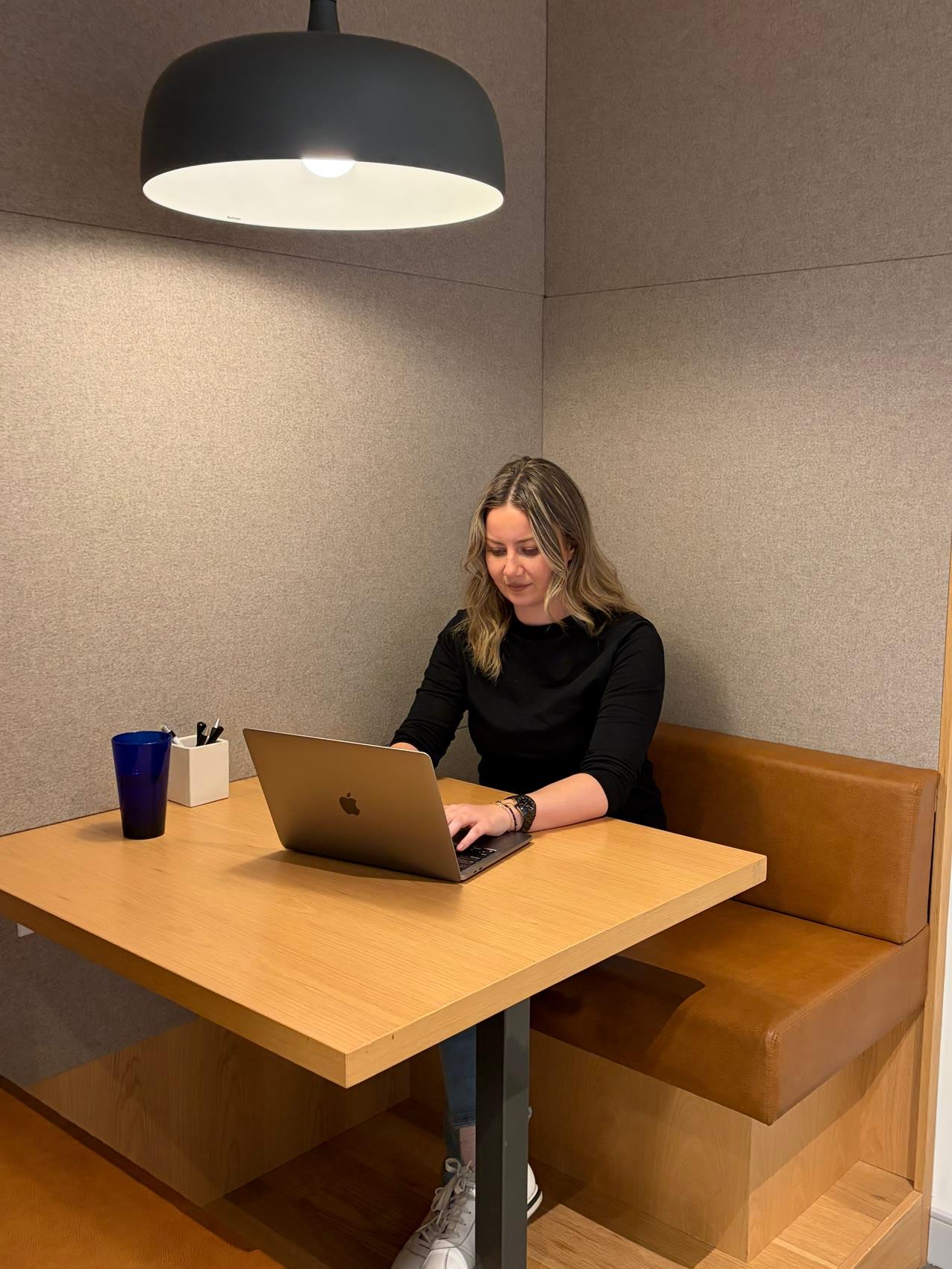
In 2018 I fainted in the main lounge of my office and was carried out on a stretcher. I was back the next morning giving a company-wide presentation. What stayed with me was not the fainting. It was the queue of colleagues who came up afterwards to tell me they had felt the same way, many times.
“They told me the feeling was normal; it was this type of rigor and commitment that made up excellence.”
Aneta Kosinska, page 6
I spent the next three years reading the research and running the practices on myself and friends, while gaining increasingly more responsibility at work, to ensure I had something that works long term. This e-book will move you off the old paradigm of forcing through and to actually understanding yourself, your energy, and how you are at your best — personally and in the business.
“While we all have the same 24 hours in a day, we don’t all have the same quality and quantity of energy available to us each day.”
Page 26
- MorningPart one
Full 4
- WorkdayPart two
The Switch
- EveningPart three
Sunset
This is not a theory I write about. It is how my own day is built, and it is why I can usually tell inside an hour when yours is running on willpower.

Movement first, before the inbox 
The senses get a say in the decision 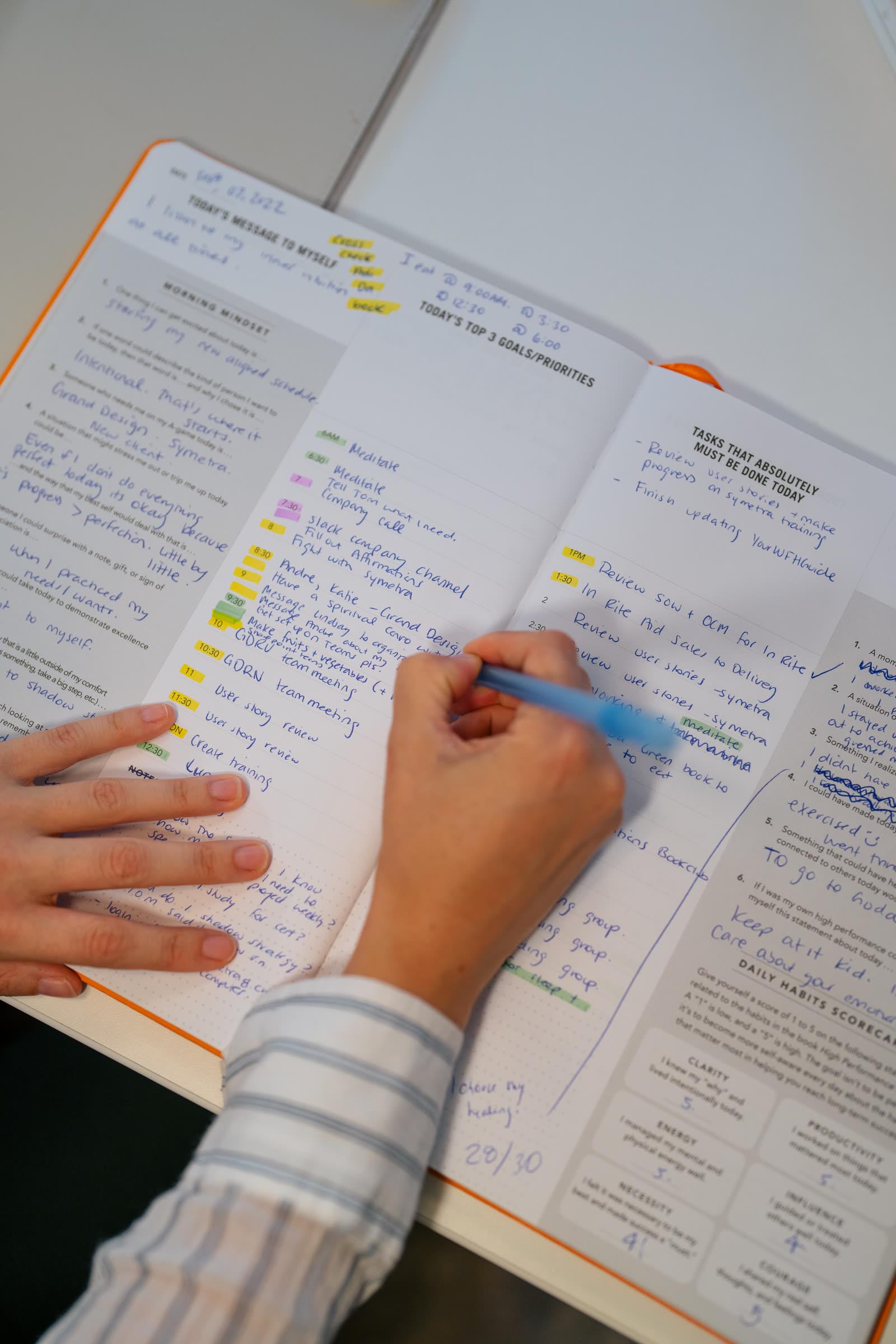
Everything out of the head, onto paper 
One timer, one thing 
A real pause, not a scroll 
Recovery is scheduled, not earned
Every practice, the same five beats.
A consultant’s structure applied to a subject that usually gets none. Nothing is asserted without a source, and nothing is prescribed that I have not run on tested. Each module closes with a table of vetted links so you can start the same evening.
Someone once told me I lived in Sedona and ran my day like a New Yorker. I am in Toronto now and Sedona is still with me, because I built it into this book on purpose.
- 01An epigraph, because I frame the idea before I argue it
- 02What the practice is, in plain language
- 03The research, cited, three or four studies per module
- 04Tips and tricks, numbered, down to the minute
- 05Personal: what I actually do, including the parts I still get wrong
Three of the roughly forty-five studies cited
Chance of a promotion or a raise for people who took more than ten vacation days in a year. For those who took fewer than ten, it was 34.6%.
Gielan, Harvard Business Review, 2016Percent more concentrated, more motivated, and more able to handle the workload, measured on the days people moved in the morning or were active at lunch.
Coulson, McKenna & Field, 2008Of our waking hours are spent thinking about something other than the thing in front of us, and that wandering tracks closely with stress.
Killingsworth & Gilbert, 2010Remote work has seven anchors. This book works one of them, Health and Well Being, all the way through a full working day. I say as much on the final page: this covers one anchor, and there is a lot more I can share. The other six can be solved for in the Sprint.
In the bookHealth and Well Being. The one anchor the book takes all the way through, across a full working day.
Honest about who it serves.
For the people doing the work day to day.
I wrote it for the people entering the next level of responsibility at work, business owners who need a reset, and anyone done running a full workload from a kitchen table. You can read it in an evening and run it for thirty.
If you lead a team, this is the book to put in their hands. It makes for a very good employee retention and employee engagement book.
For the person accountable for the whole thing.
Three days with me, working at the level of the business rather than the individual: the root of stalled growth, the friction sitting underneath it, and the themes that organise you into the leader who is fit to lead the change.
The book closes on The Remote Work Flywheel and works a single anchor of it. The Sprint is where the rest gets worked.
See the Sprint“Over the past few years of working remotely, I became a better friend to myself and I ultimately wrote this so I could help you become a better friend to yourself.”
Aneta Kosinska, page 68
AI Anonymous Series
A small monthly room of people leading AI adoption inside their companies. One topic, chosen ahead of time, and no slides.
$42CADAsk about the next one